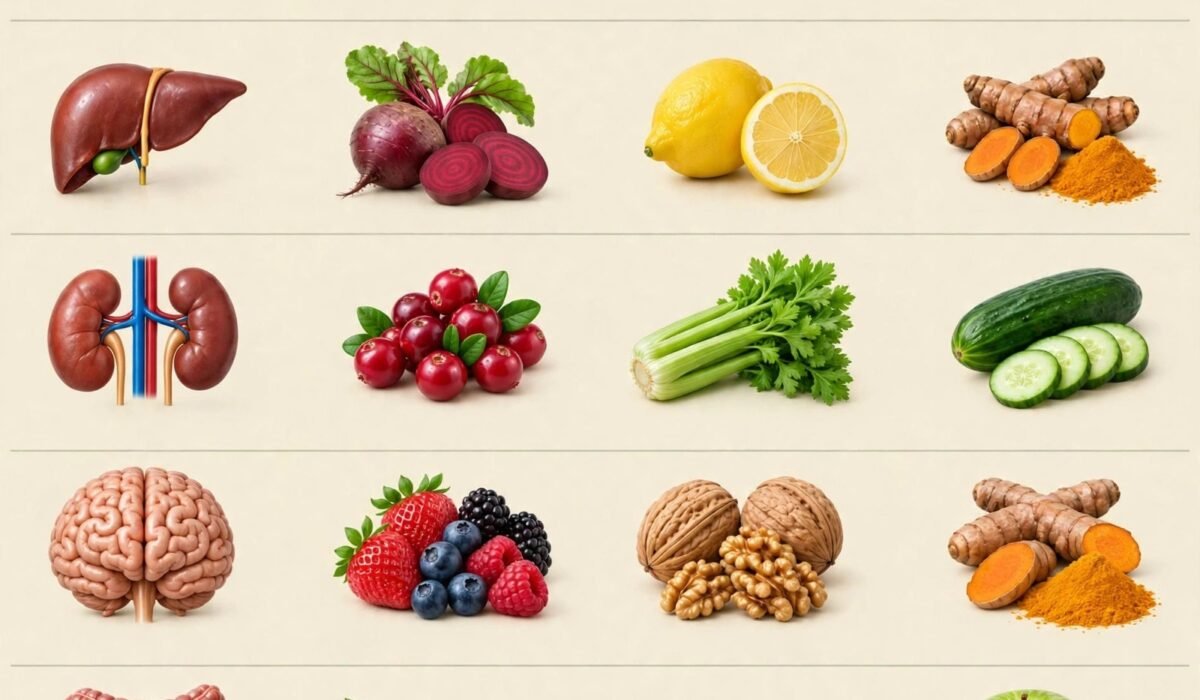


Our body already has a natural system for transforming and eliminating waste substances, in which the liver, kidneys and intestines play a key role.
No food can “purify” the body on its own, but a diet rich in water, fiber, vitamins, and antioxidants can contribute to the normal functioning of these organs.
Green leafy vegetables
Spinach, chard, lettuce, arugula, and kale provide fiber, vitamins, and antioxidants. They promote intestinal regularity and help protect cells from oxidative stress.
Broccoli and other cruciferous vegetables
Broccoli, cauliflower, cabbage, Brussels sprouts, and turnips contain glucosinolates, plant compounds involved in the body’s natural metabolic processes.
Berries
Blueberries, strawberries, blackberries, and raspberries are rich in anthocyanins and other antioxidants. Eaten whole, they also provide water and fiber.
Citrus fruits
Oranges, tangerines, grapefruits, and lemons are good sources of vitamin C. It’s best to eat the whole fruit rather than just the juice, so you also get fiber.
Apples and pears
They contain water and pectin, a soluble fiber that supports intestinal regularity and nourishes some of the beneficial bacteria present in the intestine.
Whole grains
Oats, barley, spelt, brown rice, and quinoa provide fiber, B vitamins, and minerals. They aid intestinal transit and keep you feeling full longer.
Legumes
Beans, chickpeas, lentils, and peas provide plant-based protein, fiber, folate, potassium, and magnesium. They can also be used to replace some meat-based meals.
Dried fruit and seeds
Walnuts, almonds, flaxseeds, and chia seeds provide unsaturated fats, fiber, and micronutrients. A small portion is enough, as they are highly nutritious but also high in calories.
Extra virgin olive oil and fish
Extra virgin olive oil contains monounsaturated fats and antioxidants. Sardines, mackerel, and salmon provide omega-3s, which are essential for a balanced diet.
Page 1 of 2