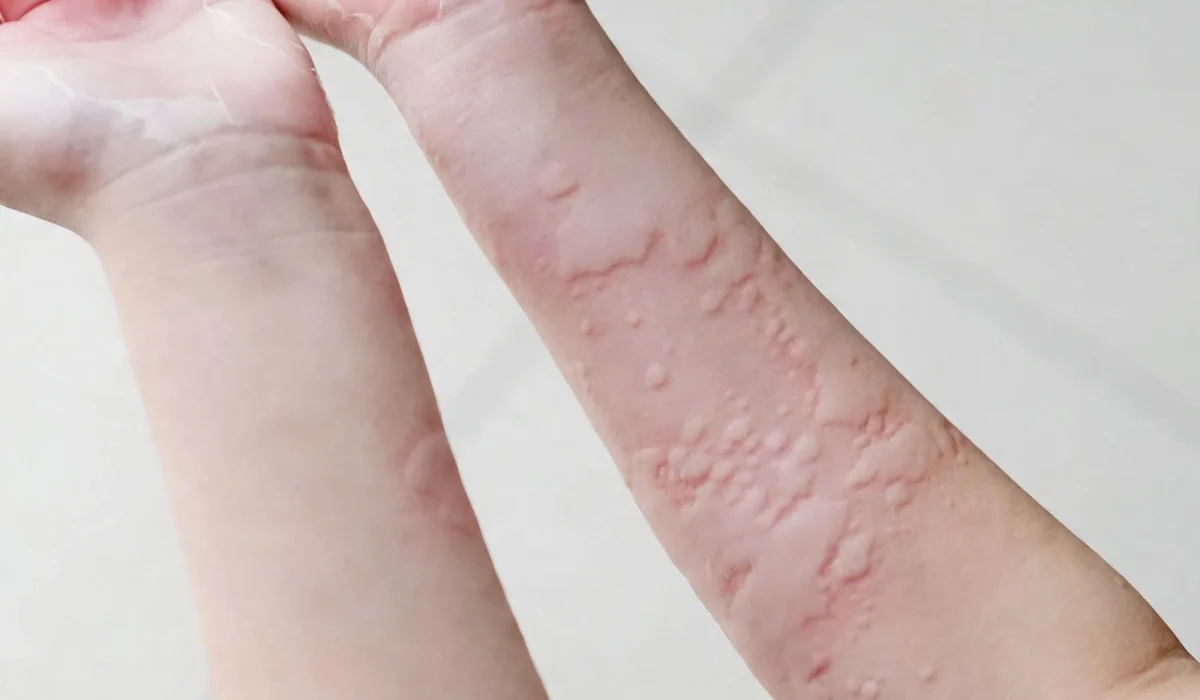


You wake up one morning with red, swollen welts that itch like never before. No visible insect bites, nothing unusual on your plate… and yet, your skin is having a meltdown. Hives are one of those skin reactions that can appear at the most unexpected moment. And what’s fascinating—and a little disconcerting—is that the triggers are often far more numerous than you might imagine.
What’s really going on under your skin
Hives are the result of a minor internal storm. Specific cells in the body, called mast cells, release histamine into the bloodstream. The result? Tiny blood vessels in the skin leak fluid, forming those characteristic raised bumps, red at the edges and paler in the center.
What distinguishes urticaria from other skin reactions is its transient nature: each welt usually disappears in less than 24 hours, without leaving a trace. But new ones can immediately appear elsewhere on the body. Frustrating, isn’t it?

Acute or chronic: not the same story
There are two main forms of urticaria. The acute form lasts less than six weeks and often has an identifiable cause—a food allergy, a medication, or a viral infection such as a common cold. The chronic form , on the other hand, persists over time. In many cases, it’s impossible to pinpoint a specific culprit: the immune system overreacts on its own, without any apparent reason.
Page 1 of 2