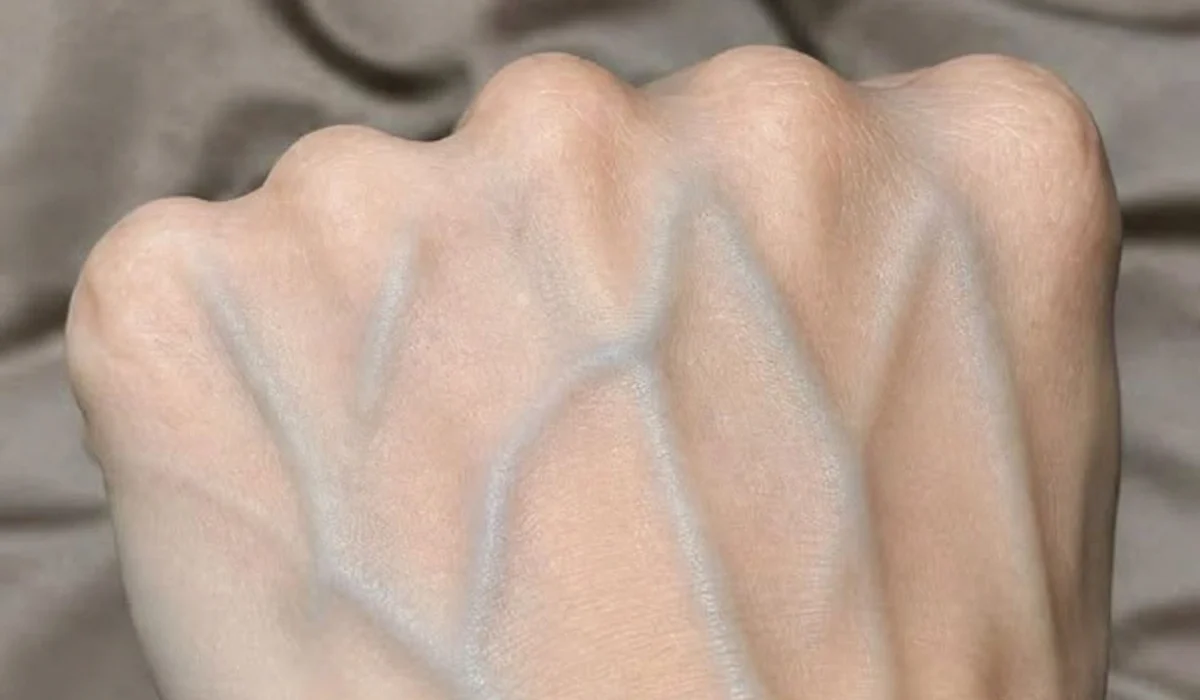


You glanced down at your hands and suddenly… there they are, clearly defined, almost surprising. Those visible veins that seem to have appeared overnight. Before you panic or rush to Google to find the worst-case scenario, take a breath. The reality is far more nuanced—and often far more reassuring—than what social media would have you believe.
What skin aging has to do with it
As we age, our skin changes. It thins, loses collagen, and some of its fatty tissue. This entirely natural process makes veins more visible, especially on the backs of the hands, where the skin is already naturally thin. There’s nothing to worry about: it’s simply the natural evolution of the body. No need to panic in front of the mirror.
Sport, weight loss and heat: the most common real reasons
If you’re athletic or naturally slim, your veins will be more visible. With less tissue under your skin, they stand out more. It’s often even a sign of good physical condition! During exercise, circulation increases, the veins dilate slightly—then everything returns to normal after the workout.
Heat also plays a significant role. In summer, or after a hot shower, blood vessels dilate to regulate body temperature. As a result, veins appear more swollen and bluer. This disappears as soon as the body cools down. Nothing serious, just normal physiological changes.
Hydration and genetics: two often overlooked factors
Not drinking enough water? That can be enough to make your veins more visible temporarily. Mild dehydration reduces the volume of subcutaneous tissue, making veins stand out more. The good news: a few glasses of water are often all it takes to improve things.
Genetics also plays a role. Some families naturally have thinner skin or shallower veins. If your mother or grandmother had the same hands as you, it’s probably simply a matter of heredity—not a health problem.
When is it really necessary to consult a doctor?
In the vast majority of cases, visible veins are perfectly normal. However, certain signs warrant closer attention. If a vein suddenly becomes painful, swollen, hot, or unusually hard, it’s best to consult a healthcare professional. The same applies if you experience swelling in one hand, persistent redness, tingling, or numbness.
Contrary to popular belief, visible veins alone don’t necessarily mean poor circulation. True circulatory problems are usually accompanied by other symptoms: constantly cold hands, tingling, skin discoloration, or slow-healing wounds. Visible veins without any other signs? You can breathe a sigh of relief.
The right reflex on a daily basis
Stay well hydrated, move regularly, and observe your body with kindness. If nothing has changed suddenly and you feel no discomfort, your hands are simply telling you your story — the story of your body shape, your activity, your life.
Your hands are unique, and that’s exactly what makes them beautiful.