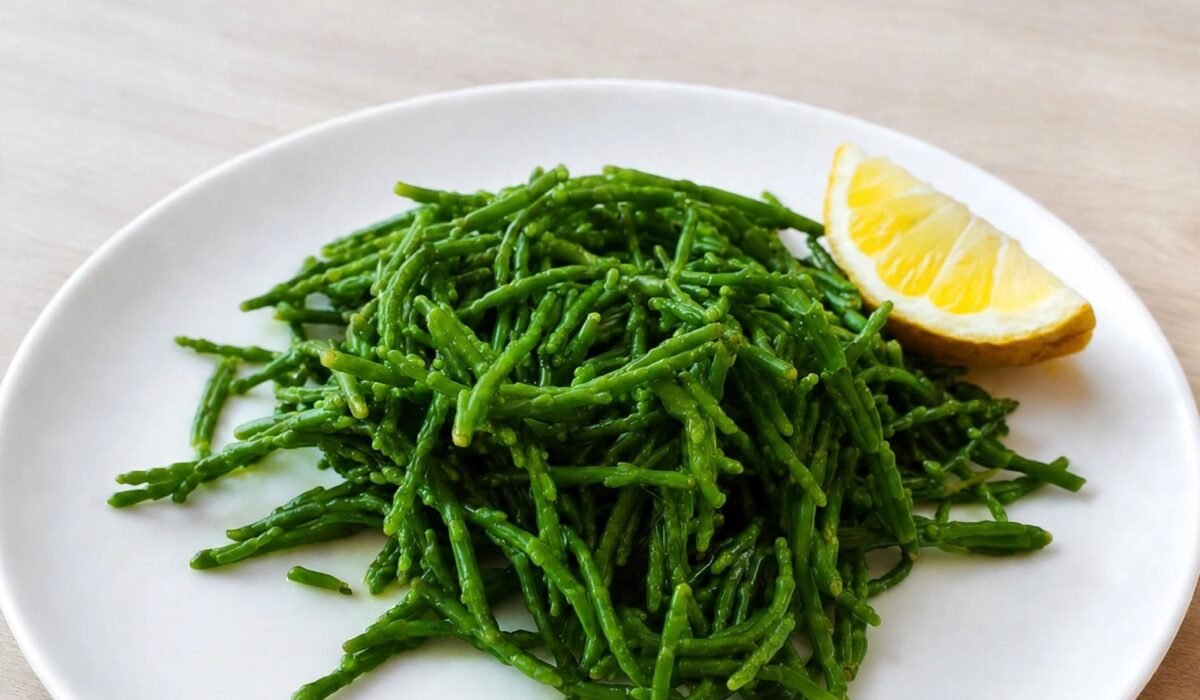


Salicornia , also known as sea asparagus , is a wild plant that grows in brackish environments, such as lagoons, salt marshes , and coastal areas. It has a bright green color, a crunchy texture, and a naturally savory flavor, immediately reminiscent of the sea.
In recent years it has become increasingly popular in the kitchen, not only for its particular flavor, but also for its nutritional properties.
Properties of glasswort
Salicornia is rich in water and contains various minerals, including potassium, magnesium, calcium, and iodine. For this reason, it’s considered an attractive food for those seeking light, natural ingredients rich in beneficial nutrients.
It is low in calories, contains fiber, and also provides natural antioxidants, substances that help protect cells from oxidative stress.
Benefits of Salicornia
Thanks to its composition, salicornia can contribute to the well-being of the body in various ways.
It promotes hydration, supports mineral balance, and can be useful as part of a varied and balanced diet. Its fiber content also helps maintain bowel regularity, while its mineral content makes it an especially beneficial food during hot weather, when more fluids and salts are lost through sweating.
Being naturally salty, it can also help flavor dishes without adding too much salt. However, this doesn’t mean it should be consumed without caution: precisely because it naturally contains sodium, those following a low-salt diet should consult a doctor.
How to eat salicornia
Salicornia can be eaten raw, after washing it thoroughly, or blanched for a few minutes. Cooking should be brief, so it retains its crunchy texture and vibrant color.
It’s excellent in salads, with fish and shellfish, in seafood pasta dishes, risottos, omelettes, or as a simple side dish with extra virgin olive oil and lemon. It also pairs well with potatoes, eggs, and fresh cheeses.
An important tip: when using salicornia, it’s best to avoid adding any additional salt, as its flavor is already naturally salty.
It’s not just a curiosity to try once: salicornia is a versatile ingredient, light and full of character, capable of transforming even a simple recipe into something more original.