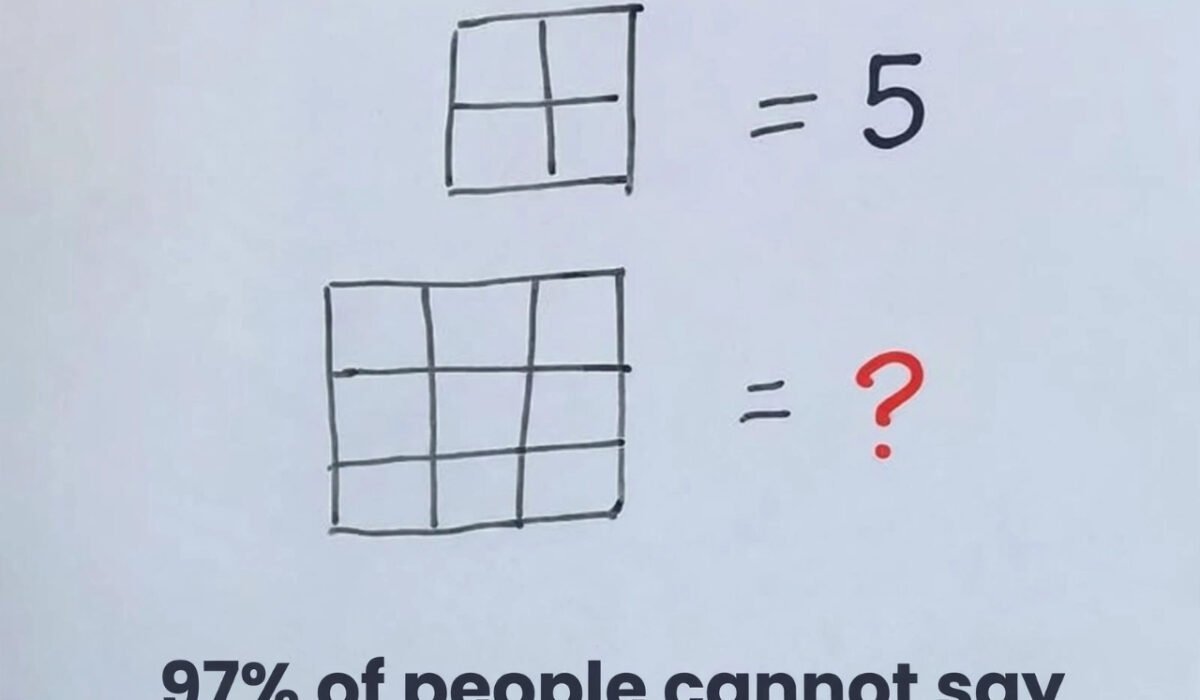


At first glance, it all seems simple: a grid, a few lines, and the answer is obvious. But this is precisely where we often fall into the trap. Why? Because our brains tend to simplify images and filter out hidden details. As a result, we stop too quickly, convinced we’ve seen everything. What if the key were to slow down, observe differently, and let logic take its course?
Why do these nets catch us?
Picture
The problem is like a puzzle : you start full of enthusiasm and then discover that there are multiple layers. The 3×3 grid, for example, isn’t just made up of small, easily visible squares. It also contains subtle combinations: medium-sized squares composed of 2×2 cells, and a large square that encloses the entire grid. If you don’t take these groupings into account, you’re missing half the story. The good news is, there’s a simple method to count everything without missing anything.
The step-by-step method for counting squares

The memory trick that changes everything
Remember this little ritual: “Small, medium, large .” First the small ones (all the 1×1 squares), then the medium ones (all the 2×2 squares), and finally the large one (the 3×3 square). This order avoids duplicates and omissions. For a 4×4 grid, the distribution looks like this: small (16), medium (9), medium-large (4, since it’s 3×3), then the largest (1, the 4×4). Adding them all up gives: 16 + 9 + 4 + 1 = 30. We’re making progress!
A little extra for logic enthusiasts…
Page 1 of 2