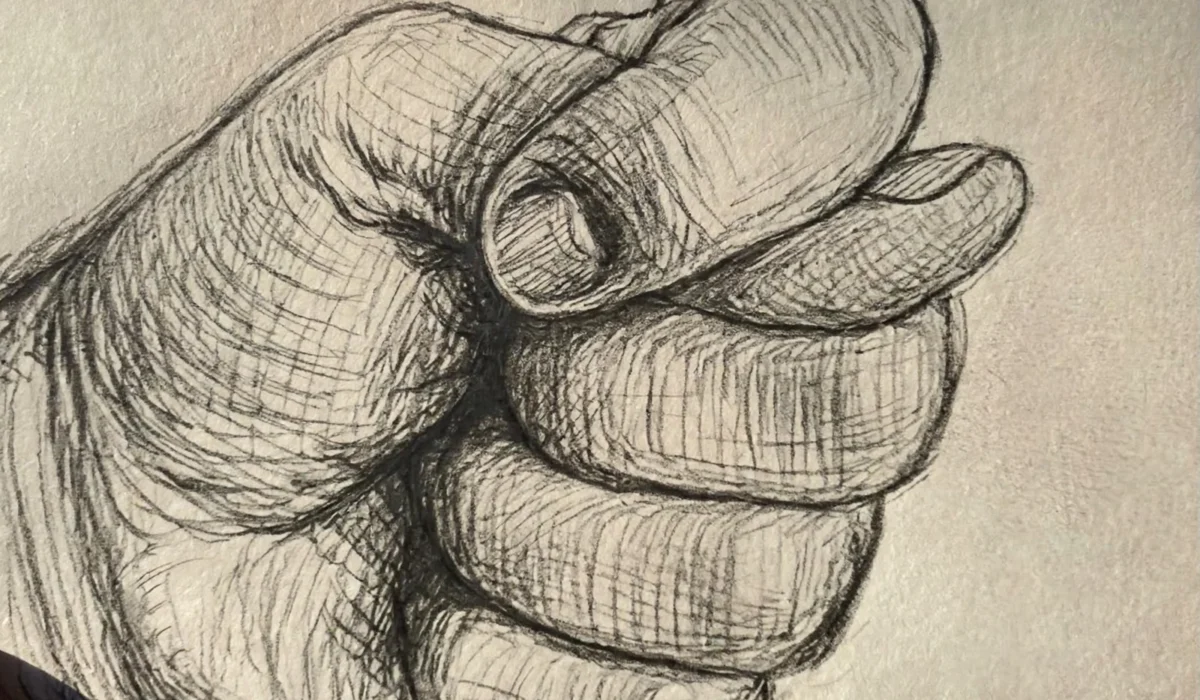


The fig gesture was part of this arsenal. Quick, discreet, effective. It allowed one to politely decline a request, express silent disagreement, defuse tension with a touch of humor, or maintain one’s dignity without escalating a situation. Its true strength? It worked thanks to an implicit understanding. If you knew, you knew.
A symbol of quiet resistance in 19th-century Europe
In 19th-century Europe, where social codes and propriety reigned supreme, this gesture became a clever shortcut to set boundaries — in silence.
Rather than arguing openly or risking losing face, this little sign was used to elegantly signify “no.” It was particularly useful in delicate situations: minor power struggles, inappropriate requests, or overly persistent teasing. In short, the art of standing firm while keeping a smile on your face. A lesson in etiquette that many wellness apps would now tout as a groundbreaking revelation.
Much more than a gesture: a symbolic protection
The fig gesture was not limited to everyday communication. It also carried a strong symbolic dimension. The closed fist evoked inner strength, the hidden thumb represented a form of protection.
In some folk traditions, it was believed that this gesture warded off bad luck, jealousy, or negative energy. It functioned like a small, discreet talisman, brought out at times of uncertainty, departure, or emotional farewell.
When a gesture becomes a family legacy
Over time, the gesture of the fig has lost its roughness and become something more tender. More familiar. Almost affectionate.
Grandmothers would slip it into games with the children, parents would use it for gentle teasing. And sometimes, in significant moments — a departure at the station, a goodbye on the doorstep — it expressed everything that words couldn’t.
What this old gesture still teaches us today
In an age of instant messaging and one-click reactions, the gesture of the fig reminds us of a slower, more thoughtful, more nuanced way of communicating. Asserting without aggression, setting boundaries without confrontation, making people laugh without hurting them: these values have stood the test of time.
Because before technology gave us a thousand ways to speak, our hands already knew everything.