

To reduce added sugars, you can slightly reduce the sugar in the cake and the syrup.
If you have diabetes , adjust the portion size and take into account the sugars present in the entire recipe.
👩🍳Step-by-step preparation
1. Prepare the oven and the baking pan
Preheat the oven to 170°C.
Thoroughly butter a 24cm cake tin, then lightly flour it. You can also line it with baking paper, letting the edges overhang to make unmolding easier.
Prepare all the ingredients in advance and make sure the eggs are at room temperature. Melt the butter and let it cool slightly before starting the dough.
2. Whisk the eggs and sugar
In a large bowl, crack the three eggs and add the 150g of sugar.
Whisk for 3 to 4 minutes until the mixture is light, frothy, and slightly voluminous. This step incorporates air and helps give the cake a lighter crumb.
3. Add the orange flavoring
Wash the oranges thoroughly and dry them. Finely zest both fruits, avoiding the white part, which could add bitterness.
Add the zest to the egg-sugar mixture, then stir in the 120 ml of freshly squeezed orange juice and the vanilla extract.
Mix gently to distribute the flavors evenly throughout the mixture.
4. Stir in the melted butter
Gradually pour in the 120g of melted butter, previously cooled, while mixing gently.
Continue mixing until you obtain a smooth mixture. The butter adds a soft texture to the crumb and a lovely richness to the mouthfeel.
Be careful not to use butter that is still hot, as this could disrupt the texture of the egg mixture.
5. Add the dry ingredients
In another container, mix the flour with the baking powder and a pinch of salt.
Sift this mixture, then gradually incorporate it into the liquid preparation in several stages.
Gently mix with a spatula until you obtain a smooth and homogeneous dough, without traces of flour.
An important tip: don’t overwork the dough after adding the flour. Overmixing can make the cake denser and less moist.
6. Pour the batter into the mold
Pour the mixture into the cake tin which has been greased and lined with baking paper.
Smooth the surface lightly with a spatula to ensure even cooking.
You can also draw a small line of soft butter lengthwise down the center of the dough to encourage a nice opening on top during baking.
7. Bake the orange cake
Bake at 170°C for 40 to 45 minutes.
The cake should gradually rise and turn a beautiful golden color. Avoid opening the oven for the first 30 minutes to prevent disrupting the rising process.
After 40 minutes, check if the cake is cooked by inserting the tip of a knife into the center. It should come out clean.
If the top is browning too quickly, you can lightly cover it with a sheet of aluminum foil at the end of cooking.
8. Prepare the orange syrup
While the cake is baking, pour the 50 ml of orange juice and the 50 g of sugar into a small saucepan.
Heat over low heat, stirring until the sugar is completely dissolved.
Simmer gently for one to two minutes to obtain a slightly concentrated syrup. Remove from heat and set aside.
9. Soak the still-warm cake
As soon as it comes out of the oven, let the cake rest for a few moments in its tin. Gently prick its surface with a wooden skewer or the tip of a toothpick, without going all the way to the bottom.
Using a brush, gradually spread the orange syrup over the entire surface of the still-warm cake.
Allow the cake to absorb the syrup before adding another layer. This step makes it more moist, intensifies its flavor, and gives its surface a beautiful shine.
10. Decorate and let cool
After the syrup has been absorbed, let the cake cool for a few minutes before carefully removing it from the mold.
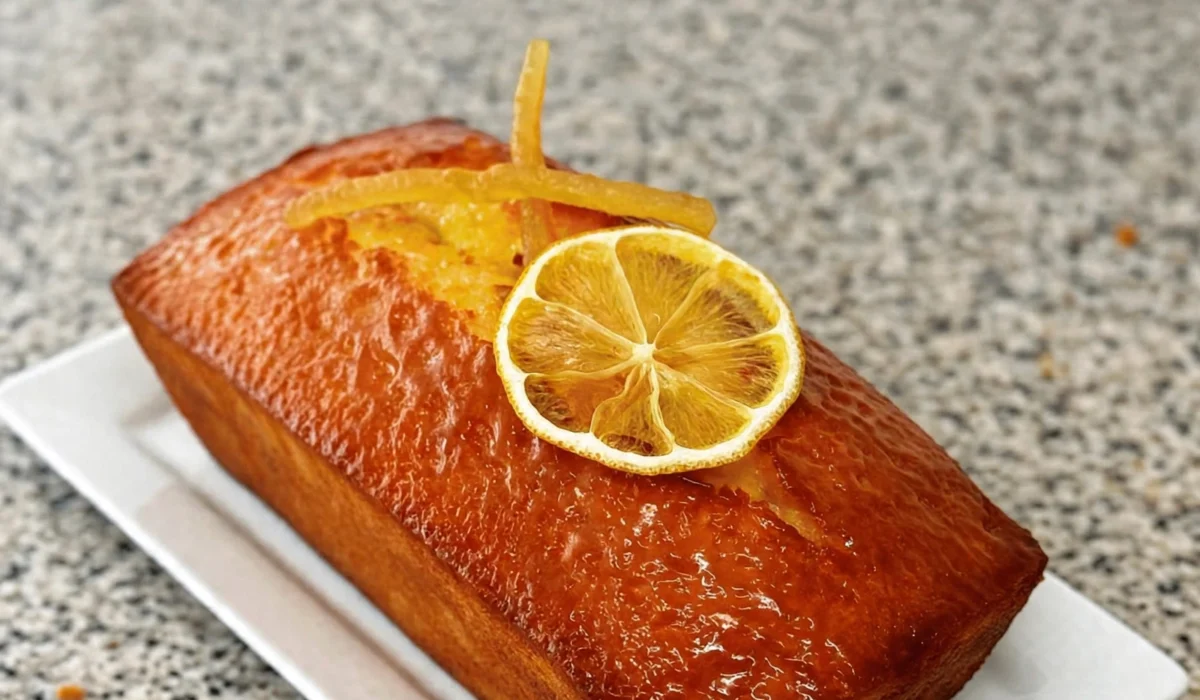
Place it on a rack and add a few thin orange slices and some candied zest for an elegant finish.
Allow to cool completely before slicing. The orange flavor will develop even more after a few hours of rest.
Page 2 of 3