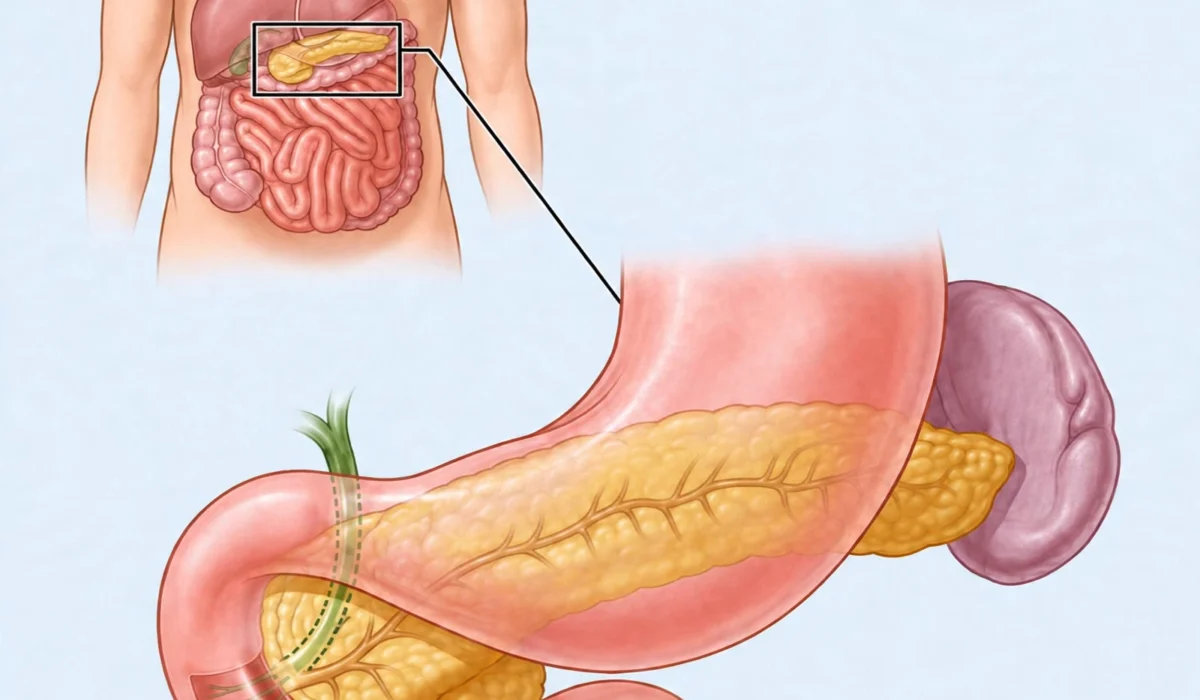


The pancreas works silently every day, but when something isn’t right, the body always finds a way to let us know. Learning to recognize these signals can make all the difference.
The pancreas is a gland with a dual purpose: it produces digestive enzymes essential for breaking down nutrients and regulates blood sugar levels through insulin and glucagon. When this silent organ stops functioning properly, the consequences are felt throughout the body.
1. Persistent abdominal pain, especially after meals
A dull or sharp pain originating in the middle or left side of the abdomen, often radiating to the back, is one of the most characteristic symptoms of a dysfunctional pancreas. It worsens after large or fatty meals, as the pancreas is forced to produce more enzymes.
2. Fatty, oily, foul-smelling stools (steatorrhea)
When the pancreas doesn’t produce enough lipase—the enzyme that digests fats—these pass into the intestine undigested. The result is pale, greasy, floating stools with a particularly strong odor. This is a clear sign of exocrine pancreatic insufficiency.
3. Unexplained weight loss
Losing weight without changing your diet or exercise is a worrying sign. When the pancreas doesn’t produce enough enzymes, the body doesn’t absorb nutrients properly, causing weight loss even when eating regularly. It’s often associated with weakness and chronic fatigue.
4. Nausea, vomiting and frequent indigestion
The pancreas helps neutralize stomach acids with pancreatic juice. If it doesn’t function properly, digestion slows, resulting in nausea, early fullness, and recurrent acid reflux, especially after meals with fatty or processed foods.
5. Excessive thirst and frequent urination
These are classic signs of impaired insulin production—the hormone that regulates blood sugar, produced by the islets of Langerhans in the pancreas. Persistent high blood sugar causes a “dilution” mechanism that leads the body to increase fluid intake and elimination.
Page 1 of 2