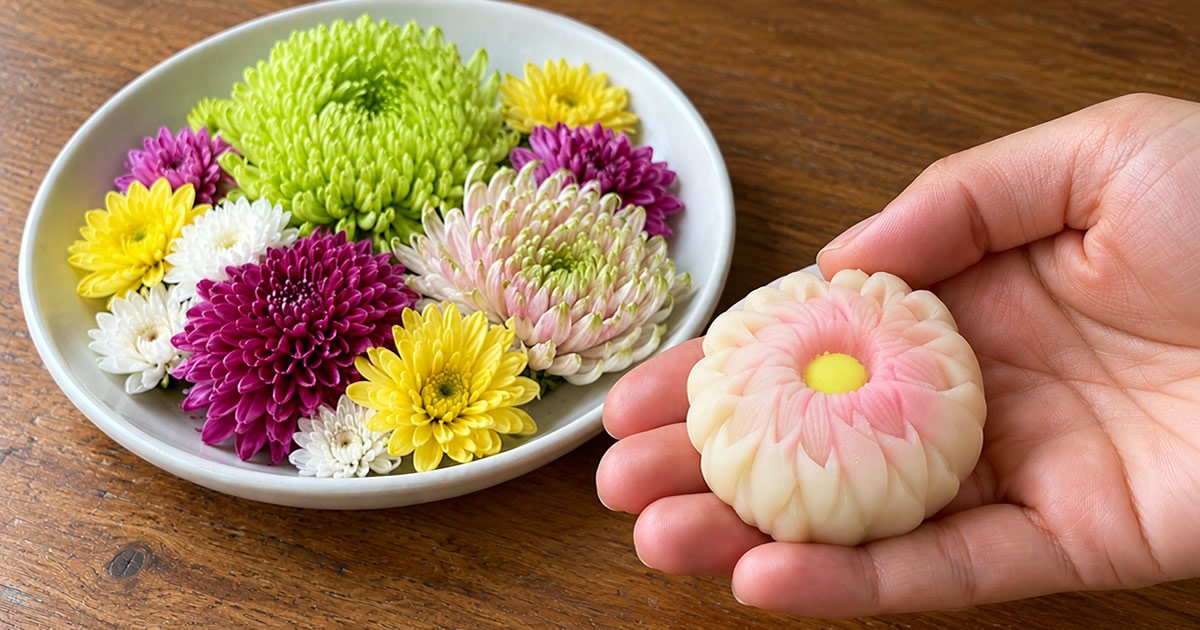


With the arrival of autumn, chrysanthemums return to color balconies and gardens. These flowers also hold a fascinating Japanese tradition: a small ritual involving dew , performed as a wish for youth and long life.
A night between flowers and dew
The custom is called kisewata and accompanies Chōyō no Sekku , the Chrysanthemum Festival, of Chinese origin. Once celebrated on the ninth day of the ninth lunar month, the holiday now falls on September 9th in Japan.
The evening before, the chrysanthemums were covered with small strips of cotton, leaving them on the flowers overnight. The cloth collected the dew and the scent of the petals. In the morning, it was gently rubbed over the skin: according to traditional belief, this gesture expressed the wish to preserve youth and live a long life.
The chrysanthemum thus became the star of a wish for health and good luck. During the festival, sake with chrysanthemum petals was also drunk, again as a wish for longevity.
How to rediscover the ritual in autumn
Even though the holiday falls in September, you can take inspiration from this custom on an autumn evening. It will be a personal tribute to tradition, to be experienced as a symbolic gesture.
- Choose a flowering chrysanthemum on the balcony or in the garden.
- In the evening, gently place a small piece of clean cotton on a flower, without crushing the petals.
- Leave it outside overnight, exposed to humidity. The presence of dew will depend on the weather.
- In the morning, pick it up and take a moment to write a wish for yourself or a loved one.
Historically, the cloth was passed over the skin. For a home version, just stick to the symbolic gesture: cotton left out in the open can collect dust, pollen, or treatment residue, so avoid using it on the face or near the eyes.
The charm of this custom lies in the attention paid to a flower and the night’s waiting. Dew isn’t a beauty treatment: in the ancient rite, it represented a hope for well-being and a long life, entrusted to nature.