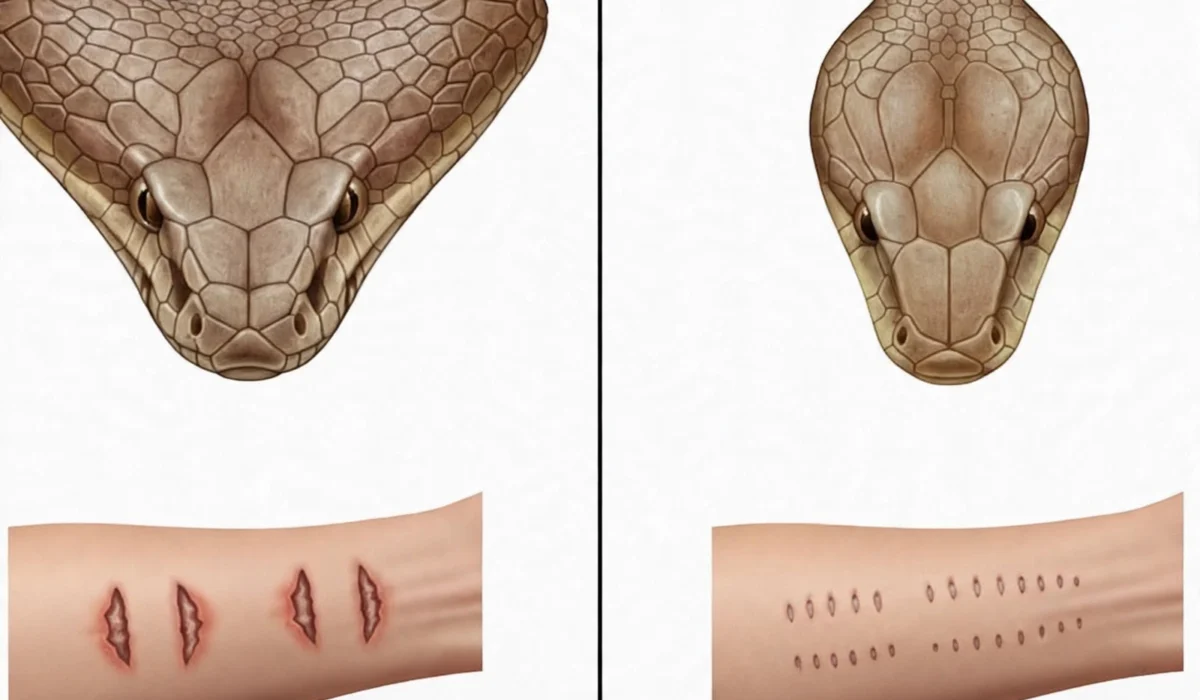


Where and when does it actually happen?
Contrary to popular belief, the vast majority of snake bites do not occur deep in the forest. They mostly happen near homes—while gardening, taking a walk, or even when clumsily trying to shoo the animal away. Snakes are looking for water and food, and our gardens often provide them with both.
Good practices to adopt: maintain your outdoor space regularly, avoid poorly defined wet areas, and put away anything that might attract rodents. And when you go outside, especially in warm weather, it’s best to wear closed shoes, long pants, and gardening gloves. More than 90% of bites affect the limbs—proper equipment really makes all the difference.
The right actions to take in an emergency
Here we are. Here’s what to do — and especially what not to do — if someone is bitten:
✅ Call emergency services immediately. Every minute counts.
✅ Immobilize the bitten area. The person should not walk or move the affected limb. Use a splint if possible.
✅ Apply a firm bandage along the entire length of the limb, starting from the bite and working upwards. Do not apply it too tightly to avoid cutting off circulation.
❌ Do not cut the wound or attempt to suck out the venom. These reflexes, however instinctive they may be, are dangerous and ineffective.
❌ Do not wash the bitten area. Traces of venom can help doctors determine the correct treatment.
❌ Do not attempt to capture the snake. This is neither useful nor safe — current treatments allow for care without precise species identification.
The bandage should only be removed in a medical setting: releasing it too soon would cause the venom to spread rapidly throughout the body.
Knowing what to do before it happens is already half the battle.