Rosemary is one of the most useful and versatile plants in the kitchen. Its unmistakable aroma and soapiness make it a key ingredient in a myriad of different dishes, both meat and fish-based.
Not to mention its health benefits and therapeutic properties: rosemary is a truly excellent plant and for this very reason it should never be missing from our homes.
The best thing about rosemary is that it’s an extremely hardy plant that can be easily planted at home and kept on the balcony. Below, we’ll list 5 tricks for growing rosemary on your balcony and ensuring it always thrives .
- Rosemary soil must be very well-drained: the plant does not tolerate excess moisture well. Make sure your pot has adequate drainage and use gravel or expanded clay beneath the soil layer.
Allow the soil to dry completely between waterings. To ensure you’re not overwatering, try sticking your finger into the soil. Sometimes, although it appears dry on the surface, the soil may actually be completely moist, so it’s best to wait a little longer before watering the plant. - Although rosemary is fairly resistant to insect and fungal attacks, it is certainly not immune. To protect the plant, prepare a chamomile infusion and spray it all over the plant, paying particular attention to the lower parts.
- Rosemary doesn’t require fertilizer and grows in any type of soil. However, a quality soil can only benefit the plant.The plant tolerates both heat and cold well, but its ideal growth conditions are a temperate climate. Protect your plant from excessive temperatures by perhaps placing it indoors.
- When you need to cut rosemary sprigs from your plant for cooking, it’s best to cut small branches from various parts of the plant.
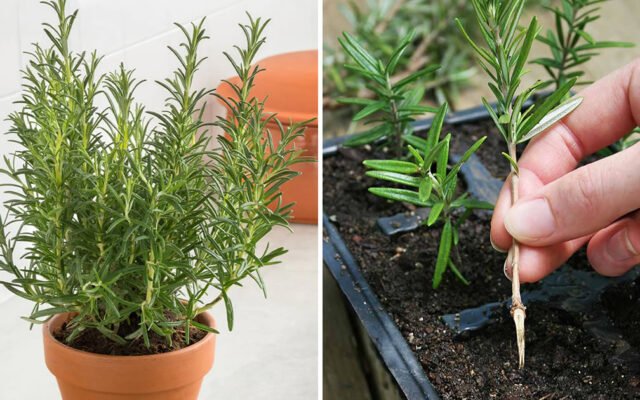
Cutting more than a third of the plant at once could cause irreversible damage. - You probably already know that rosemary can be planted from cuttings: this method is the simplest and fastest way to grow your own rosemary plant.
To use this method, find a large rosemary bush and cut a branch of your choice, which should be at least 10 centimeters long. Make the cut diagonally and remove the lower leaves to encourage root growth.
Place the cuttings in a container of water and wait for roots to form.