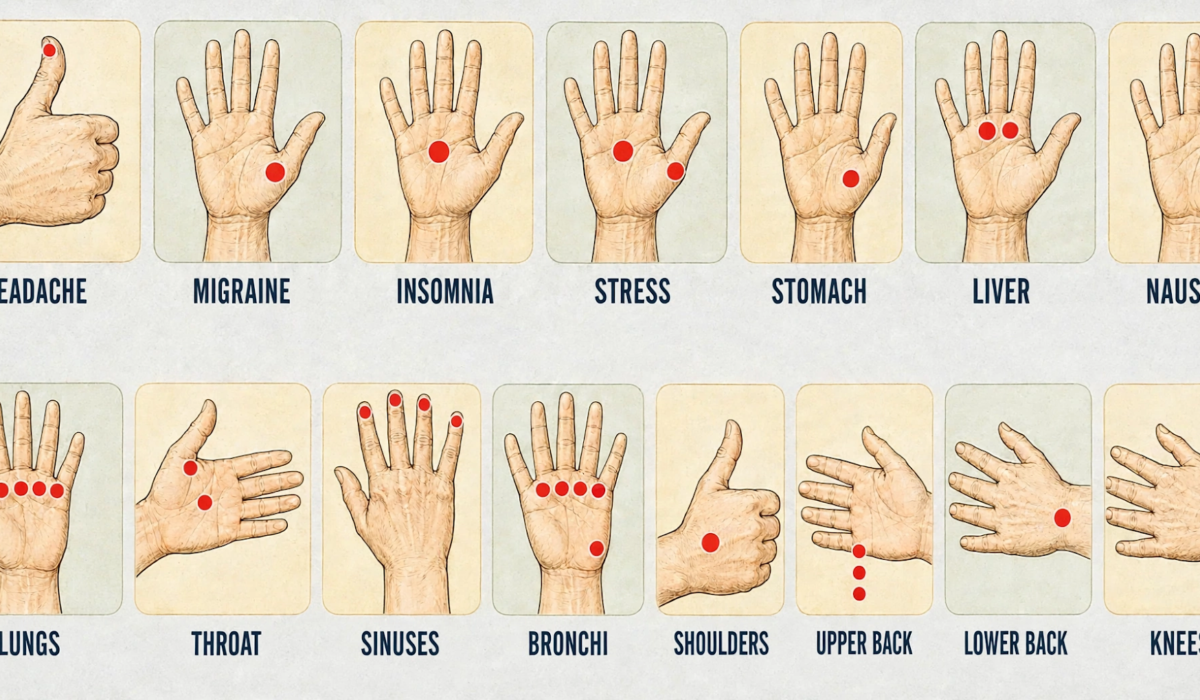


Acupressure is a practice inspired by traditional Chinese medicine. It involves stimulating specific areas of the hand and wrist through finger pressure, with the aim of promoting relaxation and alleviating minor daily ailments.
It does not replace medical care, but can be used as a simple complementary wellness practice.
How to practice acupressure
Press the affected area with your thumb and make small circular movements for about two minutes. The pressure should be firm but never painful. Breathe slowly and repeat on the other hand.
Between thumb and index finger for headache
The LI-4 point is located on the back of the hand, in the fleshy area between the thumb and index finger.
According to tradition, massaging this point can help release tension and provide relief from headaches. Press for two or three minutes, then switch hands. This point should not be stimulated during pregnancy.
Palm center for stress and relaxation
Massaging the center of the palm can help calm the mind and create a feeling of relaxation.
Place your thumb in the center of your opposite hand, make slow circular movements, and accompany the massage with deep breaths. This can become a pleasant ritual before bed.
Point P-6 for nausea
The P-6 point is located on the inside of the forearm, about three finger widths below the wrist crease, between the two central tendons.
Stimulating it with your thumb for two to three minutes can help relieve nausea in some people. However, if you experience severe, frequent, or persistent nausea, you should consult your doctor.
Fingers and back of the hand for tension
Slowly massaging each finger, from base to tip, can promote relaxation in the hands. You can complete the practice by rotating the wrists, opening and closing the fingers, and gently massaging the backs of the fingers.
These gestures do not directly cure throat, lung, back, or joint problems, but they can help slow down and reduce perceived tension.
Is the hand really connected to the organs?
Reflexology maps associate certain areas of the hand with the stomach, intestines, liver, lungs, and other parts of the body. However, these are traditional connections, not scientifically proven anatomical correspondences.
Acupressure cannot cure illnesses or replace medical treatment. However, it can provide a simple daily moment of relaxation, helping you listen to your body and rediscover a sense of calm and well-being.