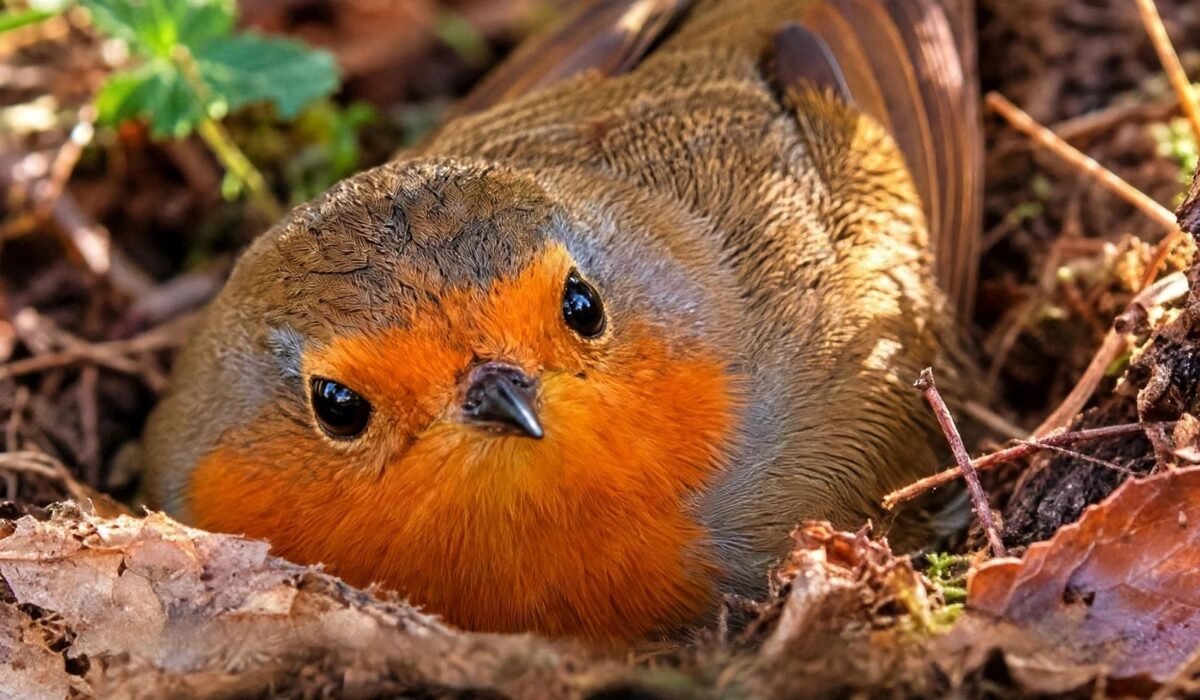


Here are a few tips to make it a real success:
– Place the pieces near a bush or hedge: robins like to look around first before coming closer. – Always offer only a small amount and remove leftovers before they start to mold. – Be patient. This little bird is curious, but also cautious. As soon as it recognizes the spot as safe, it will return regularly.
The right moment to start feeding
Be careful, there is no need to turn your garden into a canteen in the first days of September. Experts recommend waiting until the first night frost, usually between November and March, when natural resources become truly scarce.

For the rest of the year, it is best to make your garden inviting in a natural way. A few fallen leaves in a corner, a hedge of berry bushes, a slightly overgrown spot… What you see as clutter, the robin regards as a veritable pantry. Under that pile of leaves? Insects in abundance.
The essential element that we always forget: water
We think about food, but forget water. Yet birds need to drink and even bathe, even in the middle of winter.

A simple, shallow container filled with clean water, which is changed regularly, can be just as attractive as a bird feeder. Place the container in an open area so that the birds can observe their surroundings undisturbed.
And it is not just the robin that will benefit from this: tits, sparrows, blackbirds… your garden could easily become the meeting place for the entire winged neighborhood.
Your garden, their sanctuary this winter.
Feeding, watering, letting nature take its course. Three simple gestures, accessible to everyone, to offer these little visitors a place where they feel truly safe.
This autumn, you only need an apple and a bowl of water to turn your garden into an oasis of life.